
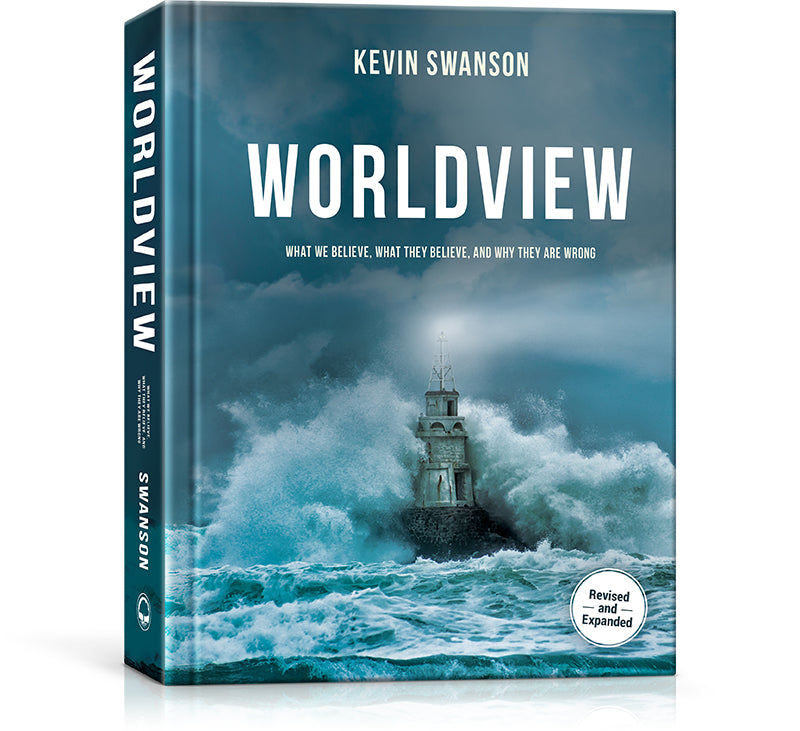
Worldview
Money-Back Guarantee
6-Month Money-Back Curriculum Guarantee
If you order a course from Generations and decide within 6 months, it's...
- Too clunky, or...
- If your kids are bored, or...
- If you can't make it fit your children's learning styles, or...
- If, for any other reason, it's not meeting your expectations...
…mail it back to us. We'll refund you 100% of the purchase price. No hassle. No questions asked. Just email customerservice@generations.org or call (888) 389-9080 for return instructions.
We only ask that you give the curriculum an honest try and cover the return shipping costs.
Click here for information on our curriculum scholarship program.
Choose options
Barely 1% of young adults hold a biblical worldview.
Only 1% of American millennials under 30 hold a biblical worldview today. In 2019 it was 2%. Back in 1995 it was 12%. And yet 56% of them still call themselves Christians. (Source: Arizona Christian University and the Barna Research Group.)
That isn't a sincerity problem. Most of these young people were never grounded in the Word well enough to know what they believe, or why. They grew up with a thousand competing voices in their ears — teachers, screens, friends — and nobody ever handed them something solid to stand on.
That's what this book gives them.
In Worldview, Kevin Swanson lays out the essentials of the Christian faith for every believer and every young student of Scripture, and then he defends them. He draws a clear line between the truth God has revealed and the man-made worldviews that have deceived the world, and he makes the case for why only one of them can be true.
What your student walks away with
Know the essentials. Swanson calls it "trunk faith": the core truths every Christian has to hold, as opposed to the "leaves," the smaller disagreements between Christian groups. He stays on the trunk. What is it that actually sets the Christian faith apart from every other religion and worldview? That's where the book begins, working through the nature of truth, of God, of man, of right and wrong, of sin and salvation, and of where history is headed. Call it theology 101 for a young believer.
Know what you're up against. "God made man upright, but they have sought out many schemes" (Ecclesiastes 7:29). With the Christian worldview in place, Swanson turns to the rival worldviews your student is going to run into and shows where each one breaks down. Paul warned believers not to be cheated "through philosophy and empty deceit" (Colossians 2:8). Nobody can refuse bait they can't see, so the book teaches students to see it.
Know how to answer. Scripture calls us to pull down arguments and "every high thing that exalts itself against the knowledge of God" (2 Corinthians 10:5). Worldview gives students the basic apologetics to do exactly that, and to give a reason for their hope without flinching.
Built around the questions every worldview has to answer
Every worldview, Christian or not, has to answer a few basic questions. What's true? What's real? What's right? What's wrong with us, and how do we get put right? Swanson works through all of them, then adds two more about how we live together and where it all ends. The book runs 560 pages across 25 chapters, in six parts:
- Part 1 — What Is True? Truth, God's revelation, and how we got the Bible and read it rightly.
- Part 2 — What Is Real? The nature and sovereignty of God, creation, angels, and man made in His image.
- Part 3 — What Is Right and Wrong? Biblical ethics and the commandments.
- Part 4 — Salvation. What's wrong with man, God's plan to save, and how a person is actually saved.
- Part 5 — Sociology. How people relate to one another, and the worship of the church.
- Part 6 — The End of the World. Where history is going, and why.
It's a full theology laid out in order. The kind of book a student can finish once and keep coming back to for years.
Who it's for
Families, discipleship groups, and anyone who wants something with more spine than a devotional. Swanson wrote it with teens and older students in mind, the ones about to head into college and the wider culture, but plenty of parents read it first to firm up their own footing before they teach it. Use it as a high school theology course or as personal study. Either way, a reader comes out knowing what they believe, why, and how to hold the line.
Worldview or Worldviews in Conflict?
Generations publishes two worldview courses, and a lot of families end up using both.
Worldview is the theology course. It explains the Christian worldview in full and measures it against the major religions and worldviews across the world today. Start here.
Worldviews in Conflict is the literature course. It sets the Christian worldview against the dominant worldviews of the West through philosophers, literature, and pop culture, and it trains students to spot those ideas in the books and films they're already taking in, and to answer them.
The first teaches you what's true. The second teaches you to recognize what isn't when you meet it in a novel or a lecture hall.
FREQUENTLY ASKED QUESTIONS
What is a biblical worldview? Everyone reads the world through a set of assumptions about what's real, what's true, and what's worth living for. A biblical worldview draws those assumptions from Scripture rather than from whatever ideas happen to be in the air. The book takes each of those questions in turn.
Is it a good fit for homeschool high school? Yes. Families use it as a stand-alone high school theology or worldview course all the time. It works just as well for church discipleship groups and for adults studying on their own.
Do I need Worldviews in Conflict too? They pair well, but you don't need both to begin. Worldview is the foundation. Worldviews in Conflict builds on it by teaching students to recognize competing worldviews in literature and culture. Most families start with Worldview.
Which Bible translation does it use? Mostly the King James Version, with the NKJV and ESV quoted in a few places.
How long is it? 560 pages and 25 chapters, in six parts covering truth, reality, ethics, salvation, sociology, and the end of the world.